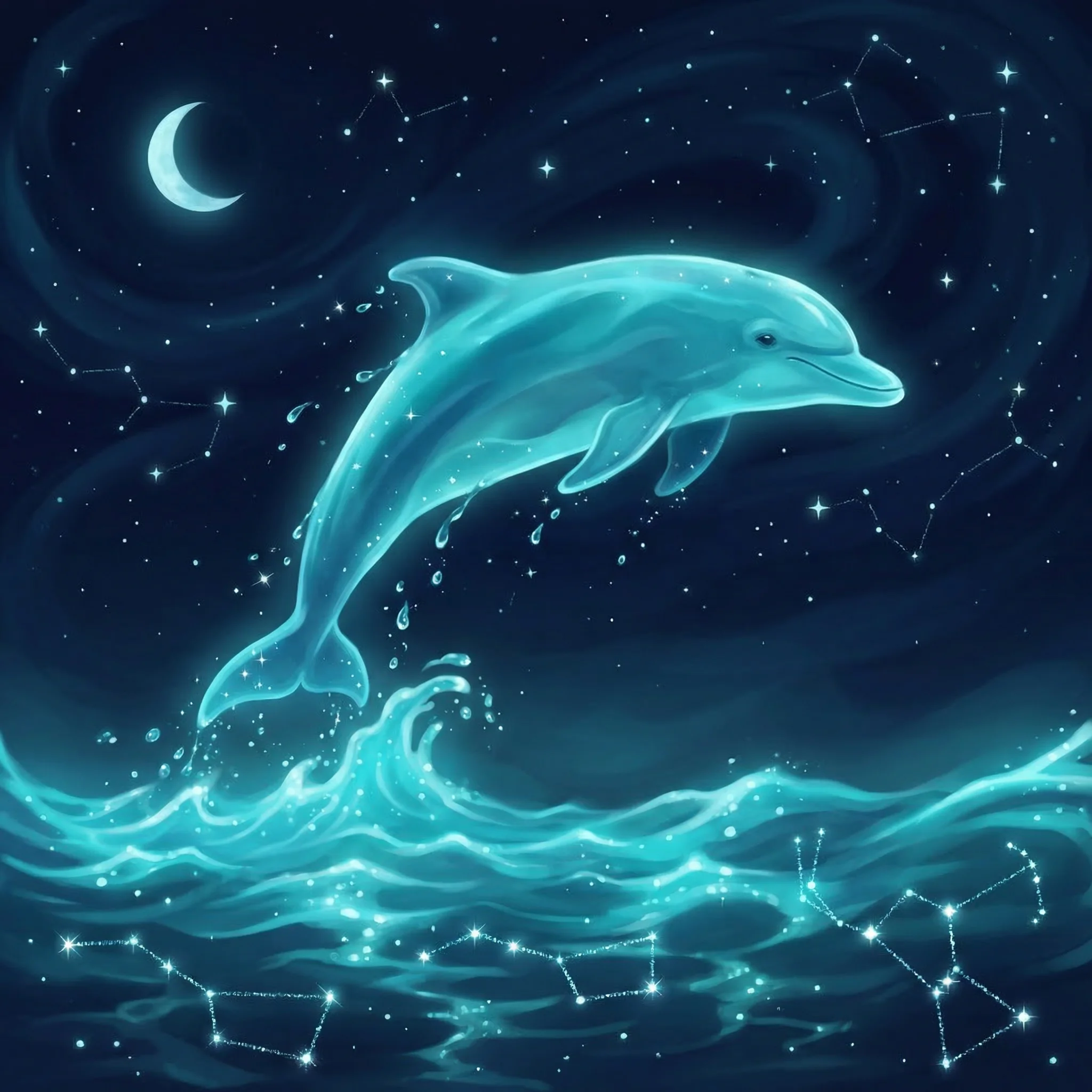
Sleep Archetype
The Dolphin
You don't sleep lightly by choice — your brain refuses to fully power down
Is This Your Chronotype? Take the Free QuizUnderstanding The Dolphin
You are tired. You are always tired. But when you lie down and close your eyes, your brain ignites. Thoughts cascade — tomorrow's tasks, something you said three years ago, a noise from the street, the sensation of your own heartbeat. You shift positions. You check the time. You calculate: if I fall asleep right now, I'll get five hours and forty-two minutes. The calculation itself wakes you up further. At 2am you're staring at the ceiling, exhausted to your bones but completely, mercilessly awake. You've tried everything. Melatonin made you groggy but didn't stop the waking. The meditation app worked for three nights and then didn't. The sleep hygiene articles told you things you already do. You are not failing at sleep. You are a Dolphin — and your brain is neurologically wired to resist the shutdown that other chronotypes take for granted.
The Dolphin chronotype, representing roughly 10% of the population, is characterised by a nervous system that maintains heightened cortical arousal even during rest. In clinical terms, Dolphins exhibit elevated sympathetic nervous system activity at night, higher-than-normal levels of cortisol during the evening hours, and reduced production of the neurotransmitters (particularly GABA) that facilitate the transition from wakefulness to sleep. Real dolphins — the marine mammals this chronotype is named after — sleep with half their brain at a time, one hemisphere always alert for predators. Human Dolphins experience something analogous: a brain that never fully powers down, that maintains a sentinel-like vigilance even when exhaustion should overwhelm it. This is not a habit problem. It is not caused by screens, caffeine, or a lack of discipline (though those things make it worse). It is a neurobiological predisposition, and treating it requires strategies that are fundamentally different from the standard sleep hygiene advice that works perfectly well for Bears and Lions.
What makes the Dolphin chronotype particularly challenging is the anxiety-insomnia feedback loop. Poor sleep increases anxiety. Anxiety increases hyperarousal. Hyperarousal prevents sleep. Each bad night makes the next one more likely, until the Dolphin develops a conditioned fear of their own bedroom. The bed becomes associated with frustration, clock-watching, and failure rather than rest. Breaking this loop is the central objective of the 8-week Dolphin Protocol. Unlike generic insomnia programs, this protocol is built specifically for the Dolphin's neurological profile: it combines stimulus control (breaking the bed-wakefulness association), cognitive offloading (giving the racing mind a structured outlet before bed), precise temperature manipulation (exploiting the thermoregulatory sleep trigger that Dolphins underutilise), and strategic sleep restriction (counterintuitively reducing time in bed to increase sleep efficiency). Dolphins who complete this protocol don't just sleep better — they often describe it as the first time in their lives they understood that sleep was actually achievable, reliably, without fighting their own brain.
Signs You Are a Dolphin Chronotype
Difficulty falling asleep and staying asleep — the mind races at bedtime
Light sleeper who wakes at minor disturbances throughout the night
Feels tired but wired — exhausted yet unable to surrender to sleep
Tends toward anxiety, perfectionism, and hypervigilance
Irregular sleep-wake patterns with no consistent "best time" for anything
Morning alertness varies wildly from day to day depending on sleep quality
Common Behaviors You Might Recognize
- 🐬Lies in bed replaying conversations, planning tomorrow, or worrying about things that cannot be solved at midnight
- 🐬Wakes at 3am and cannot fall back asleep despite being exhausted
- 🐬Checks the clock repeatedly during the night, calculating remaining sleep hours with growing anxiety
- 🐬Feels most mentally alert in sporadic bursts — sometimes mid-morning, sometimes late afternoon — with no predictable pattern
- 🐬Has tried melatonin, white noise, meditation apps, and weighted blankets with inconsistent or temporary results
- 🐬Functions surprisingly well on limited sleep some days, then crashes completely on others
Strengths
- Highly intelligent with exceptional attention to detail and pattern recognition
- Hyper-aware and perceptive — notices things others miss entirely
- Strong analytical thinking, particularly suited to problem-solving and quality-focused work
- When sleep is optimised, Dolphins experience a dramatic and disproportionate improvement in every area of life
Challenges
- Sleep anxiety creates a vicious cycle: worrying about sleep makes sleep worse, which increases worry
- Chronic sleep fragmentation impairs memory consolidation, emotional regulation, and immune function
- Unpredictable energy patterns make scheduling, commitments, and routines difficult to maintain
- The gap between Dolphin potential and Dolphin performance (due to sleep deprivation) creates persistent frustration
The 8-Week Dolphin Protocol
Chronotype Discovery — understanding why your brain resists sleep and how hyperarousal differs from insomnia
Light Exposure Protocol — precise morning light timing to stabilise your erratic rhythm, and aggressive evening darkness to lower cortical arousal
Optimal Schedule Design — building a flexible daily structure that accommodates energy unpredictability while protecting your best windows
Evening Wind-Down — a dolphin-specific 2-hour decompression protocol targeting the racing mind with cognitive offloading, body scans, and temperature cycling
Caffeine & Nutrition Timing — why dolphins must stop caffeine by 11am, the role of magnesium and tryptophan-rich evening meals, and blood sugar stability for uninterrupted sleep
Exercise & Movement — moderate morning exercise to lower evening cortisol, and why intense evening workouts are especially destructive for the dolphin nervous system
Social & Work Alignment — managing energy variability at work, communicating needs to partners, and building buffer days into your schedule
Long-Term Maintenance — building a dolphin-proof sleep environment, stimulus control mastery, and a crisis protocol for bad-sleep spirals
Not Sure If This Is Your Chronotype?
Take our free 2-minute quiz to discover your exact sleep chronotype and get a personalized 8-week program.
Take the Free Quiz