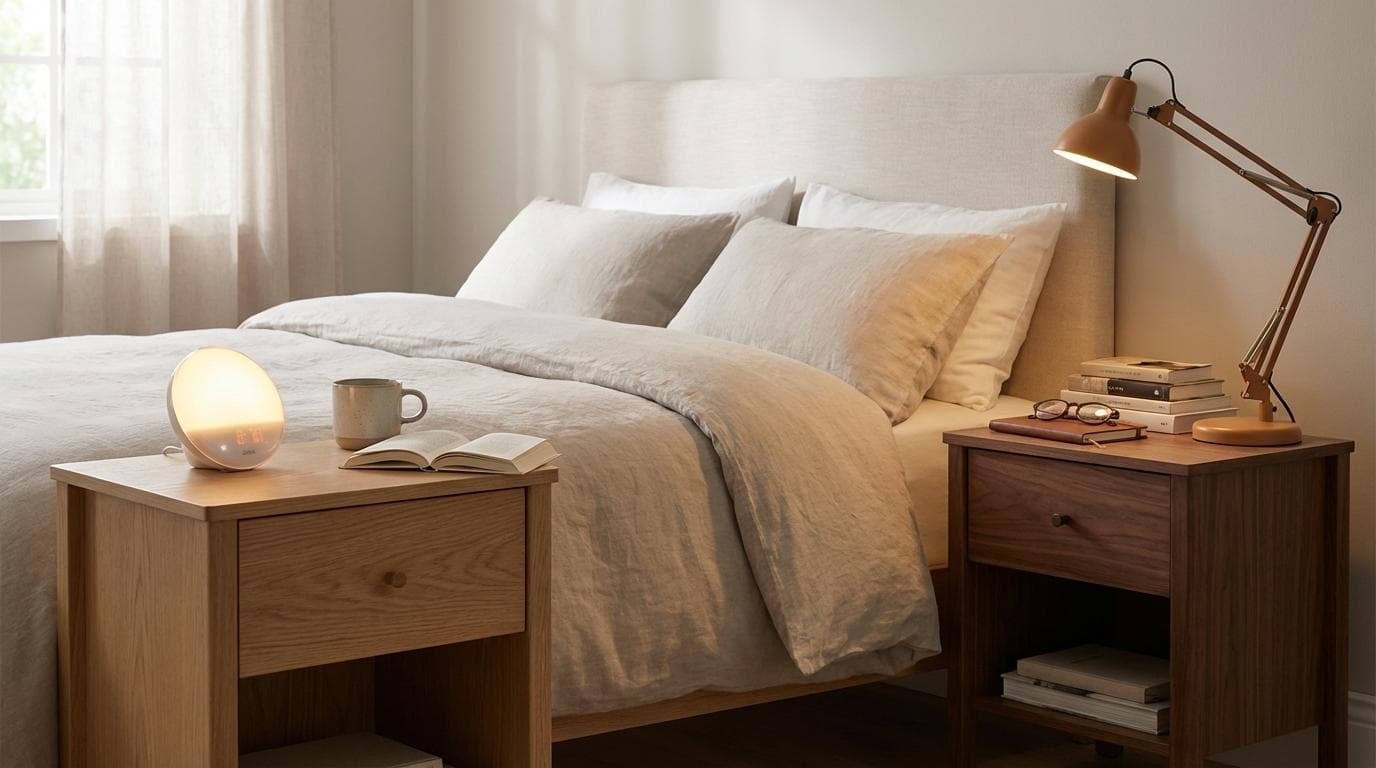
You wake up naturally at 6am, already planning your day. Your partner is still dead asleep, face buried in the pillow, and won't be functional until at least 9. By the time they're energized and ready to talk, you're fading. By the time you want the light off, they've just hit their second wind.
You're not incompatible as people. You have different chronotypes. And that difference — though often framed as a personal failing or a matter of laziness versus ambition — is a biological reality that millions of couples navigate daily. The good news is that it's navigable. The bad news is that ignoring it, or misunderstanding it, tends to create chronic low-grade friction that neither partner can fully explain.
What a Different Chronotypes Relationship Actually Means
Chronotype is the expression of your internal biological clock — the circadian rhythm that governs when you feel alert, when you feel sleepy, and when your body is primed for different kinds of activity. It is largely genetic. It shifts over your lifetime (teenagers trend later; older adults trend earlier), but your core chronotype is not a preference you can simply override with willpower.
When two people with significantly different chronotypes share a life, they are quite literally living on different biological schedules. The Wolf (natural night owl) is physically not tired at 10pm. Their body temperature is still elevated, cortisol hasn't bottomed out, and melatonin hasn't fully risen. Asking them to fall asleep then is like asking a Lion (natural early riser) to stay alert and engaged at midnight. It's not stubbornness. It's biology.
Understanding this reframe is the foundation for making a mixed-chronotype relationship work. The conflict isn't a character flaw in either partner. It's two different internal clocks running in the same household, and the goal is to design around that reality rather than fight it.
The Most Common Chronotype Conflicts in Relationships
Different chronotypes create tension in predictable patterns. Recognizing which ones apply to your situation helps you address them specifically rather than letting them merge into general relationship friction.
Bedtime mismatch is the most obvious one. The early riser wants the light off, the room quiet, and their partner in bed by 10. The night owl isn't physiologically ready to sleep and finds the pressure to do so either frustrating (because they lie awake) or isolating (because they're up alone). Neither is wrong.
Morning communication is another. The Lion is at peak cognitive function from 7 to 10am and wants to talk, plan the week, have a real conversation over breakfast. Their Wolf partner is in a fog, still requiring several hours to reach anything resembling alertness. The Lion interprets the monosyllabic responses as disengagement. The Wolf is just not awake yet.
Weekend schedule drag is common and underappreciated. When the Wolf catches up on sleep Saturday and Sunday — sleeping until 10am, natural and restorative for their chronotype — the Lion has been awake since 6, has already run, cleaned the kitchen, and built a small amount of resentment about what feels like the morning being wasted. The Wolf wakes up to an already-tense partner and doesn't understand why.
Evening quality time is where the Wolf often feels shortchanged. By 9pm, the Lion is winding down, slower in conversation, less emotionally available. The Wolf is warming up — finally past the cognitive fog of the morning, energized and ready to connect. The window for genuine shared time can feel very narrow when chronotypes diverge significantly.
Couples Sleep Schedule Strategies That Actually Work
Making a different chronotypes relationship work doesn't require either partner to override their biology. It requires intentional design — agreed-upon structures that accommodate both people rather than defaulting to one chronotype's needs.
Identify the real shared window. For most mixed-chronotype couples, there's a genuine overlap period — typically late morning to early afternoon — where both partners are reasonably functional and neither is at peak fatigue. Scheduling your most important conversations, shared activities, and connection time in this window rather than defaulting to either early morning or late evening can make a significant difference.
Negotiate the bed separately from the sleep schedule. Many couples conflate "when we go to bed" with "when we go to the bedroom." These don't have to be the same. The Lion can go to the bedroom to read or wind down at 9:30. The Wolf can come to bed later, doing so quietly without turning on lights. Morning departures can be handled similarly — the Lion leaving the bedroom without fanfare while the Wolf sleeps on. Some couples find that separate alarms, separate reading lights (eye masks for the sleeping partner), and agreed-upon quiet protocols make the physical bedtime mismatch largely invisible.
Consider the evidence on sleep divorce — sleeping in separate beds or separate rooms. Studies consistently show that couples who sleep separately report better sleep quality and, often, better relationship satisfaction than couples who force co-sleeping despite incompatible schedules. The cultural weight of sharing a bed is real, but it shouldn't outweigh the physical cost of chronic sleep disruption. Parallel sleep setups — separate rooms that you visit each other's for sex and intimacy, then each return to your own — work well for many couples once the stigma is set aside.
Managing the Partner Night Owl Dynamic
The specific combination of one Lion (or Bear) partner and one Wolf partner is among the most common and most friction-generating. Some particular dynamics are worth naming.
The Wolf often gets the worse end of social jet lag. Most work schedules favor earlier chronotypes. The Wolf chronotype partner is likely already sleep-deprived from the workweek — waking at 7 when their body clock wants 9, spending years accumulating a sleep deficit. When the weekend arrives and they finally sleep in, they are not being lazy. They are repaying a physiological debt. Framing it this way with the early-rising partner — not as preference but as biological need — tends to reduce resentment significantly.
The Lion often carries unequal morning labor. While their partner sleeps, the early riser is often the one handling morning tasks — feeding animals, dealing with deliveries, managing things that arise at 7am. Over time this can feel inequitable. The solution isn't for the Wolf to override their chronotype to share these tasks (they'll do them worse and resent it). It's to redistribute other tasks toward the Wolf's peak hours, creating actual equity rather than superficial schedule-matching.
Evenings belong to the Wolf — let them. The Wolf chronotype reaches peak cognitive and social function in the late evening. Rather than the early riser pushing to stay up (accruing sleep debt) or the Wolf shutting down early (fighting their biology), structuring evening hours as Wolf time — the Wolf manages evening responsibilities, plans for the next day, handles creative work — while the Lion genuinely rests creates a natural division that works with both chronotypes.
What to Do When the Different Chronotypes Relationship Feels Unsustainable
Some couples reach a point where the chronotype gap feels like more than a scheduling logistics problem. Chronic sleep disruption makes emotional regulation harder for both partners. A sleep-deprived Wolf who is constantly woken by an early alarm, or an early-waking Lion who consistently lies awake in a partner's light and noise, can develop real health consequences alongside the relational friction.
If you're at this point, the conversation to have is not about whose sleep schedule is more inconvenient. It's about designing a household structure that genuinely protects both partners' sleep. That might mean committing to separate sleeping arrangements, agreeing on specific quiet hours, or taking a serious look at whether work schedules can be shifted to better honor natural chronotypes.
The couples who navigate chronotype differences most successfully tend to share one belief: that being well-rested makes them better partners. Sleep isn't the opposite of connection — sleep deprivation is. Protecting each other's sleep, even when it means separate beds or different morning rhythms, is an act of care rather than a rejection of intimacy.
Take our free Sleep Archetype Quiz to discover your chronotype and get personalized guidance for designing a sleep life that actually works.
Further Reading
Discover Your Sleep Chronotype
Take our free quiz to find your unique sleep chronotype and get a personalized 8-week program to optimize your sleep and energy.
Take the Free Quiz →More Articles
Social Jetlag: Why Your Weekend Sleep Habits Are Ruining Your Monday
Social jetlag disrupts your circadian rhythm every weekend. Learn how inconsistent sleep timing affects metabolism, mood, and long-term health by chronotype.
The Best Time to Nap Based on Your Chronotype
Discover the best time to nap based on your chronotype. Learn how Lions, Bears, Wolves, and Dolphins should time 20 vs 90-minute naps for maximum alertness.
How Much Sleep Do You Actually Need? (It Depends on Your Chronotype)
Discover how much sleep you actually need based on your chronotype. Bears, lions, wolves, and dolphins each have different optimal sleep durations.