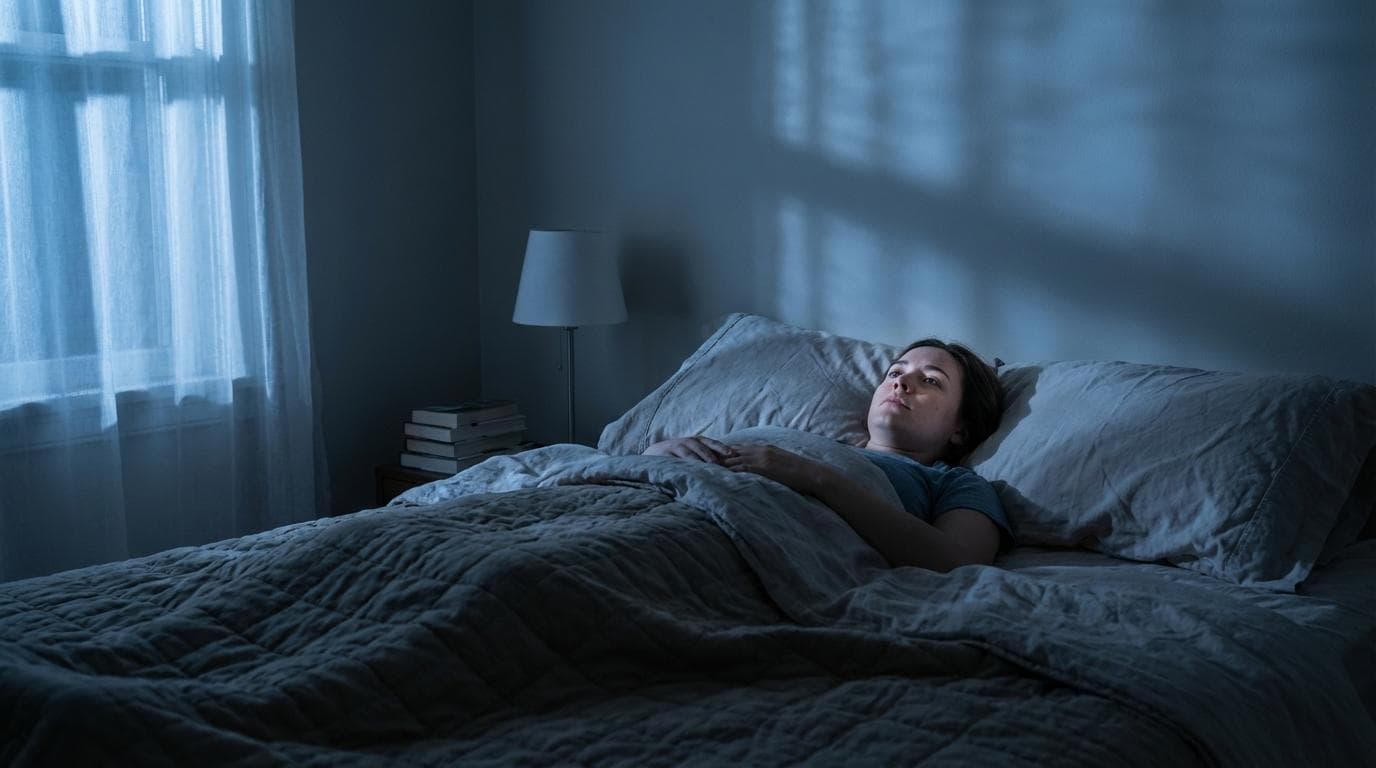
You're tired. You've been tired for years. You do everything right — consistent bedtime, dark room, no screens — and still you lie awake, mind humming, alert to every creak in the house. You're not a bad sleeper. You're a Dolphin.
The Dolphin is one of four chronotypes identified by sleep researcher Michael Breus, representing roughly 10 percent of the population. Named after the dolphin's remarkable ability to sleep with only half its brain at a time (remaining vigilant for threats even while resting), the Dolphin chronotype describes people whose nervous systems are wired for hyperarousal — always partly on watch, even in sleep.
Understanding this isn't just semantically interesting. It changes how you approach your sleep problems, and more importantly, what solutions actually work.
What Makes Dolphin Sleep Different
Most people who describe themselves as poor sleepers assume the issue is behavioral — that they're doing something wrong at bedtime. For Dolphins, the problem is deeper. It's architectural.
The Dolphin's autonomic nervous system runs at a higher baseline activation level than other chronotypes. The sympathetic nervous system (your fight-or-flight system) doesn't fully downregulate at night the way it does in Bears and Lions. This means:
- Sleep onset is slow and effortful — the mind keeps generating thoughts and concerns even when the body is exhausted
- Sleep is shallow — Dolphins spend less time in N3 deep sleep and more time in lighter stages, leaving them vulnerable to waking from small disturbances
- Early morning waking is common — the nervous system ramps up arousal again around 4 or 5am, often hours before a useful wake time
- Daytime alertness is paradoxical — Dolphins are often most mentally sharp in the mid-morning, when anxiety has settled somewhat, even though total sleep was poor
The Dolphin chronotype is also linked to higher rates of perfectionism, intelligence, and anxiety sensitivity. Dolphins often describe their minds as "always on" — something that produces real professional advantages but costs them significantly in sleep.
Why Standard Sleep Advice Often Fails Dolphins
Most sleep hygiene advice is designed for the average sleeper — someone who's simply developed bad habits around screens or irregular bedtimes. For them, fixing the environment fixes the problem.
Dolphins have tried all of that. The blackout curtains are up. The phone is in another room. The bedroom is cool. And they're still lying awake at midnight cataloguing tomorrow's concerns.
The problem with standard sleep hygiene advice for Dolphins is that it addresses the bedroom environment without addressing the nervous system state that's actually preventing sleep. Hyperarousal doesn't respond to environment optimization alone. It responds to something more specific.
There's also a cruel irony built into Dolphin sleep: the more you try to sleep, the harder it becomes. Sleep effort — the active monitoring of whether you're asleep yet, the strategic relaxation attempts, the frustration at the clock — creates cortisol, which is precisely the hormone that prevents sleep. For Dolphins who are already running at higher arousal baseline, this sleep effort becomes a reinforcing cycle.
CBT-I: The Most Evidence-Based Approach for Dolphins
Cognitive Behavioral Therapy for Insomnia (CBT-I) is the most rigorously supported treatment for chronic insomnia and the most useful framework for Dolphin sleep challenges. It's been shown in multiple meta-analyses to outperform sleep medication for long-term improvement, and it addresses the psychological and behavioral components of sleeplessness directly.
The core components most relevant to Dolphins:
Sleep restriction therapy. This is counterintuitive but powerful: initially limit your time in bed to your actual sleep time (for many Dolphins, 5 to 6 hours). This builds genuine sleep pressure, making it easier to fall and stay asleep. Over several weeks, you gradually extend time in bed as sleep efficiency improves. Dolphins often resist this because it initially increases daytime tiredness — but the mechanism works, and most people see improvement within two to three weeks.
Stimulus control. The bed should be used only for sleep and sex — not reading, scrolling, working, or watching television. The goal is to restore the association between lying down and falling asleep. Dolphins who spend hours lying awake have inadvertently conditioned their brains to associate the bed with wakefulness and frustration.
Cognitive restructuring. Dolphins are prone to catastrophizing about sleep — "if I don't sleep tonight, tomorrow will be ruined." This anxiety about sleep creates the arousal that prevents sleep. Identifying and reframing these thoughts is a core CBT-I technique that directly addresses the hyperarousal mechanism.
Paradoxical intention. For Dolphins, trying to sleep is often the problem. Paradoxical intention — deliberately trying to stay awake while lying in bed, watching the ceiling without effort — can reduce the performance anxiety around sleep enough for sleep to arrive on its own.
Practical Sleep Hygiene That Actually Helps Dolphins
Beyond CBT-I, some specific sleep environment and timing adjustments matter more for Dolphins than for other chronotypes:
Temperature precision matters. The ideal sleep environment for Dolphins is cooler than average — 65 to 67 degrees Fahrenheit. Dolphin hyperarousal means their core body temperature regulation during sleep is less smooth than in other types, and a cool environment supports the temperature drop that facilitates deep sleep.
Noise management requires actual masking, not just quiet. Dolphins are exquisitely sensitive to intermittent sounds — a car, a neighbor's door, a partner's breathing change. Consistent sound masking (brown or pink noise is often more effective than white noise for Dolphins) provides a stable acoustic background that prevents the nervous system from alerting to unexpected sounds.
Anxiety scheduling works. Set aside 15 minutes in the early evening to write down every worry, concern, or task your mind tends to process at bedtime. This explicit "worry time" offloads the evening rumination process and reduces the amount of cognitive content competing for attention when you're trying to fall asleep.
Avoid naps entirely if possible. Unlike Lion and Bear chronotypes, most Dolphins' sleep is already fragile enough that daytime napping — even a short one — reduces nighttime sleep pressure and makes the hyperarousal problem worse.
Time your hardest cognitive work carefully. Dolphins typically have a mid-morning window (10am to noon) when anxiety is relatively quiet and alertness is genuine. Protect this window for demanding work. Scheduling high-stakes cognitive tasks in the evening, when Dolphin cortisol is rising again, makes sleep onset even harder.
What to Do When You Can't Sleep
Even with all the right practices in place, Dolphins will have nights when sleep simply doesn't come. How you respond to those nights matters enormously.
The single most counterproductive response is lying in bed frustrated, watching the clock, calculating how many hours you have left. Clock-watching is a Dolphin sleep killer. Cover or turn the clock. If you've been awake for more than 20 minutes and feel genuinely frustrated, get up.
When you get up during a sleepless period:
- Go somewhere other than the bedroom
- Do something boring and non-stimulating: read a physical book in dim light, fold laundry, sit quietly
- Do not use screens
- Return to bed when you feel genuinely sleepy, not just when you think you should
This gets easier over time. The goal is to break the frustration-arousal cycle that Dolphins enter when they try to force sleep.
[Take the Sleep Archetype quiz](/quiz) to confirm your Dolphin chronotype and get a personalized sleep plan built around your specific hyperarousal pattern — including exact timing recommendations, environment setup, and which CBT-I techniques work best for your profile.
Being a Dolphin doesn't mean accepting a lifetime of poor sleep. It means understanding that the path to better sleep runs through your nervous system, not your pillowcase. The right approach, applied consistently, produces real and lasting improvement — even for the most vigilant sleepers.
Discover Your Sleep Chronotype
Take our free quiz to find your unique sleep chronotype and get a personalized 8-week program to optimize your sleep and energy.
Take the Free Quiz →More Articles
Social Jetlag: Why Your Weekend Sleep Habits Are Ruining Your Monday
Social jetlag disrupts your circadian rhythm every weekend. Learn how inconsistent sleep timing affects metabolism, mood, and long-term health by chronotype.
The Best Time to Nap Based on Your Chronotype
Discover the best time to nap based on your chronotype. Learn how Lions, Bears, Wolves, and Dolphins should time 20 vs 90-minute naps for maximum alertness.
How Much Sleep Do You Actually Need? (It Depends on Your Chronotype)
Discover how much sleep you actually need based on your chronotype. Bears, lions, wolves, and dolphins each have different optimal sleep durations.