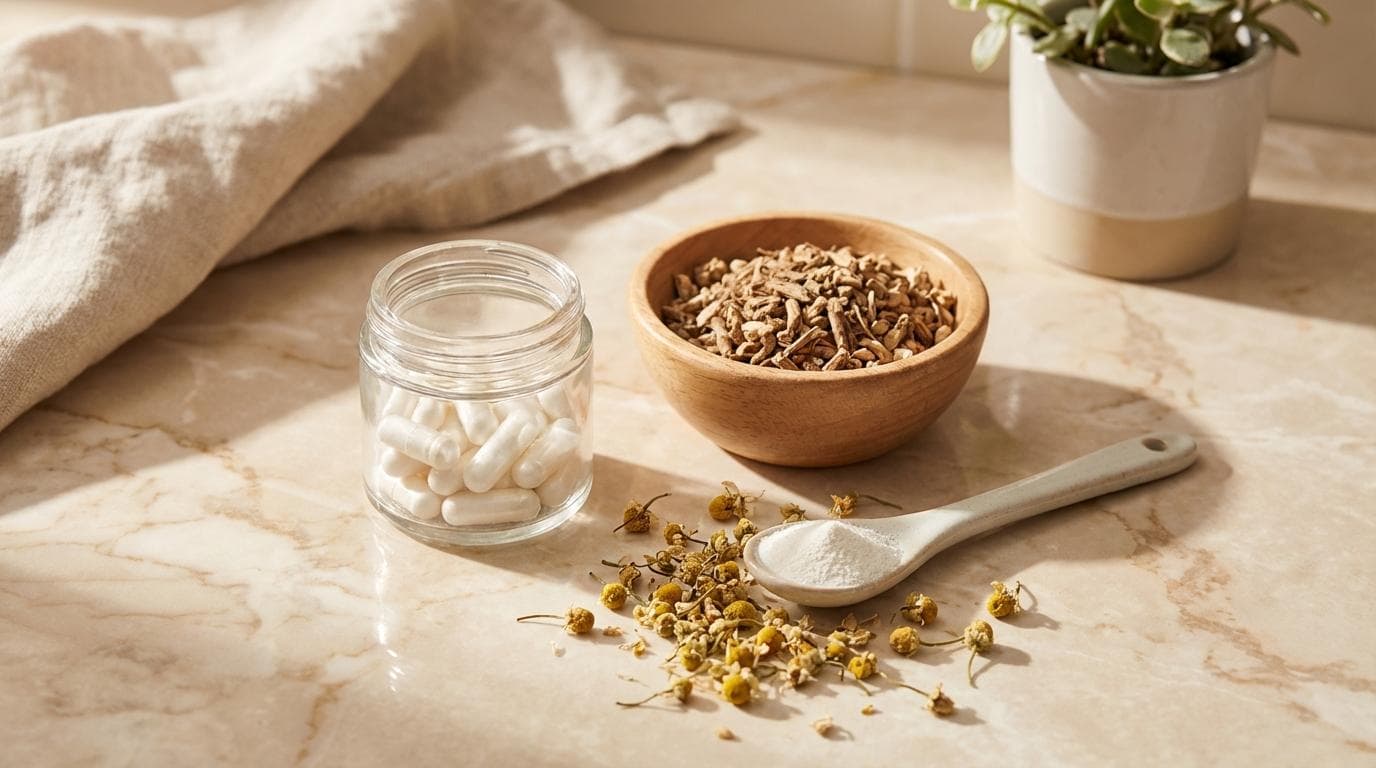
The natural sleep supplement market is enormous — and enormously confusing. Walk into any pharmacy or health food store and you'll find dozens of products promising deeper, more restful sleep. Some have genuine research backing. Others are riding centuries of folk tradition with minimal modern evidence. And a few are essentially placebos in expensive packaging.
This guide examines the most popular natural sleep supplements based on what the clinical evidence actually shows, not what the marketing claims.
Magnesium
The evidence: Moderate to good for specific populations. Magnesium plays a role in over 300 enzymatic reactions in the body, including several involved in sleep regulation. It activates the parasympathetic nervous system (the "rest and digest" system), regulates melatonin production, and binds to GABA receptors — the same neurotransmitter system targeted by prescription sleep medications like benzodiazepines.
Clinical trials have shown that magnesium supplementation improves sleep quality primarily in people who are magnesium-deficient — which, according to population studies, includes roughly 50% of adults in Western countries. For people with adequate magnesium levels, supplementation may provide little additional benefit.
Best form: Magnesium glycinate (well-absorbed, minimal digestive side effects) or magnesium threonate (crosses the blood-brain barrier). Avoid magnesium oxide — it's cheap but poorly absorbed and causes digestive issues.
Dosage: 200-400mg of elemental magnesium, 30-60 minutes before bed. Start with the lower end to assess tolerance.
Verdict: Worth trying, especially if your diet is low in magnesium-rich foods (dark leafy greens, nuts, seeds). Low risk, well-tolerated, and addresses a common deficiency.
Valerian Root
The evidence: Mixed and generally disappointing. Valerian has been used as a sedative for over 2,000 years, and it remains one of the most popular herbal sleep remedies globally. However, the clinical evidence is inconsistent.
A comprehensive meta-analysis published in the American Journal of Medicine concluded that valerian may improve subjective sleep quality — meaning people feel like they slept better — but objective measures (time to fall asleep, total sleep time, sleep architecture) show minimal improvement compared to placebo.
The studies that do show benefits tend to use valerian over extended periods (2-4 weeks), suggesting that any effect may be cumulative rather than immediate. Single-dose studies generally show no significant effect.
Dosage: 300-600mg of standardized extract, 30-60 minutes before bed. Must be used consistently for at least 2 weeks before assessing effectiveness.
Verdict: Low risk but probably low benefit for most people. May work for some individuals through mechanisms we don't fully understand — or through placebo effect, which is itself clinically meaningful for sleep.
L-Theanine
The evidence: Promising, particularly for anxiety-related sleep difficulties. L-theanine is an amino acid found naturally in tea leaves (particularly green tea). It promotes relaxation without sedation by increasing alpha brain wave activity — the brain wave pattern associated with calm, wakeful relaxation.
Multiple studies have shown that L-theanine reduces anxiety and improves sleep quality, particularly in individuals whose sleep problems are driven by an overactive mind or difficulty "switching off." A 2019 randomized controlled trial found that 200mg of L-theanine improved sleep quality scores significantly compared to placebo.
What makes L-theanine particularly interesting is that it doesn't cause drowsiness. It reduces the mental arousal that prevents sleep without acting as a sedative. This makes it a better fit for Dolphin chronotypes and anxious sleepers than for people whose sleep issues are primarily circadian.
Dosage: 100-200mg, 30-60 minutes before bed. Can also be taken during the day for anxiety reduction without causing drowsiness.
Verdict: Strong option for people whose sleep issues involve anxiety, racing thoughts, or difficulty relaxing. Well-tolerated with minimal side effects.
Glycine
The evidence: Good, and the mechanism is well-understood. Glycine is an amino acid that lowers core body temperature by dilating blood vessels in the periphery, drawing heat away from the core. Since the body needs to drop core temperature to initiate sleep, glycine essentially accelerates a natural sleep-onset process.
A study published in Sleep and Biological Rhythms found that 3g of glycine before bed improved subjective sleep quality, reduced the time to fall asleep, and — perhaps most importantly — reduced daytime drowsiness and improved cognitive function the following day. The effect on next-day function suggests that glycine improved sleep quality, not just sleep onset.
Dosage: 3g (3,000mg) 30-60 minutes before bed. This is a higher dose than most amino acid supplements, so capsules may be impractical — glycine powder mixed into water or tea is more convenient.
Verdict: Underrated and underused. The mechanism is clear, the evidence is solid, and the side effect profile is excellent. Particularly useful for people who sleep in warm environments or who tend to feel warm at bedtime.
Tart Cherry Juice
The evidence: Moderate. Tart cherries are one of the few natural food sources of melatonin, and they also contain anti-inflammatory compounds that may independently support sleep. Several small studies have shown that tart cherry juice consumption improves sleep duration and quality in adults with insomnia.
A study in the Journal of Medicinal Food found that subjects drinking tart cherry juice twice daily slept an average of 84 minutes longer than those drinking a placebo. However, the studies are small and the cherry juice group's improvement may be partly due to the juice's impact on inflammation rather than melatonin content specifically.
Dosage: 8oz (240ml) of tart cherry juice twice daily — morning and evening — or 480mg of tart cherry extract in capsule form.
Verdict: A food-based option that has some support but involves significant sugar intake (unless you use the extract). Reasonable to try, particularly for people who prefer food-based interventions over pills.
Passionflower
The evidence: Limited but positive. Passionflower (Passiflora incarnata) has shown anxiolytic effects in several studies, and one randomized controlled trial found that passionflower tea improved subjective sleep quality compared to placebo. The mechanism likely involves GABA system modulation.
Dosage: 250-500mg extract or one cup of passionflower tea before bed.
Verdict: Mild effect, best suited as an addition to an evening wind-down routine rather than a primary intervention. Safe, pleasant as a tea, and may provide modest benefit.
What About Melatonin?
Melatonin deserves separate mention because while it's widely used as a sleep supplement, it's actually a hormone — and it works differently than the supplements above. Melatonin doesn't make you sleepy in the way a sedative does. It signals to your brain that darkness has arrived and it's time to prepare for sleep.
For this reason, melatonin is most effective for circadian rhythm issues — jet lag, shift work, delayed sleep phase — rather than general insomnia. The optimal dose is much lower than what most commercial products contain: 0.5-1mg is as effective as 5-10mg for most people, with fewer side effects (grogginess, vivid dreams).
Matching Supplements to Chronotypes
Lions: Lions rarely need sleep-onset help but may benefit from magnesium or glycine if social obligations push their bedtime later than natural. Their robust sleep architecture means they respond well to simple interventions.
Bears: Bears with occasional sleep difficulties may find magnesium or glycine sufficient. L-theanine is a good option if stress or worry is the primary sleep disruptor.
Wolves: Wolves benefit most from melatonin (low dose, timed to target bedtime) when trying to shift their sleep schedule earlier. Magnesium glycinate in the evening can also help ease the transition to sleep.
Dolphins: Dolphins — with their naturally light, fragmented sleep and tendency toward anxiety — are the chronotype most likely to benefit from L-theanine and magnesium together. The combination addresses both the mental hyperarousal and the physiological tension that characterize Dolphin sleep difficulties.
Take the free chronotype quiz to identify your sleep archetype and get supplement recommendations tailored to your specific sleep challenges.
Important Disclaimers
Natural doesn't mean risk-free. All supplements can interact with medications, and some (particularly valerian and passionflower) may enhance the effects of sedative medications or alcohol. Consult your healthcare provider before starting any supplement regimen, especially if you take prescription medications.
Supplements address symptoms, not root causes. If your sleep problems stem from a misaligned schedule, poor sleep hygiene, or an underlying sleep disorder, supplements will at best provide partial relief. Fixing the underlying issue — starting with understanding your chronotype — is always more effective.
Further Reading
Discover Your Sleep Chronotype
Take our free quiz to find your unique sleep chronotype and get a personalized 8-week program to optimize your sleep and energy.
Take the Free Quiz →More Articles
Social Jetlag: Why Your Weekend Sleep Habits Are Ruining Your Monday
Social jetlag disrupts your circadian rhythm every weekend. Learn how inconsistent sleep timing affects metabolism, mood, and long-term health by chronotype.
The Best Time to Nap Based on Your Chronotype
Discover the best time to nap based on your chronotype. Learn how Lions, Bears, Wolves, and Dolphins should time 20 vs 90-minute naps for maximum alertness.
How Much Sleep Do You Actually Need? (It Depends on Your Chronotype)
Discover how much sleep you actually need based on your chronotype. Bears, lions, wolves, and dolphins each have different optimal sleep durations.