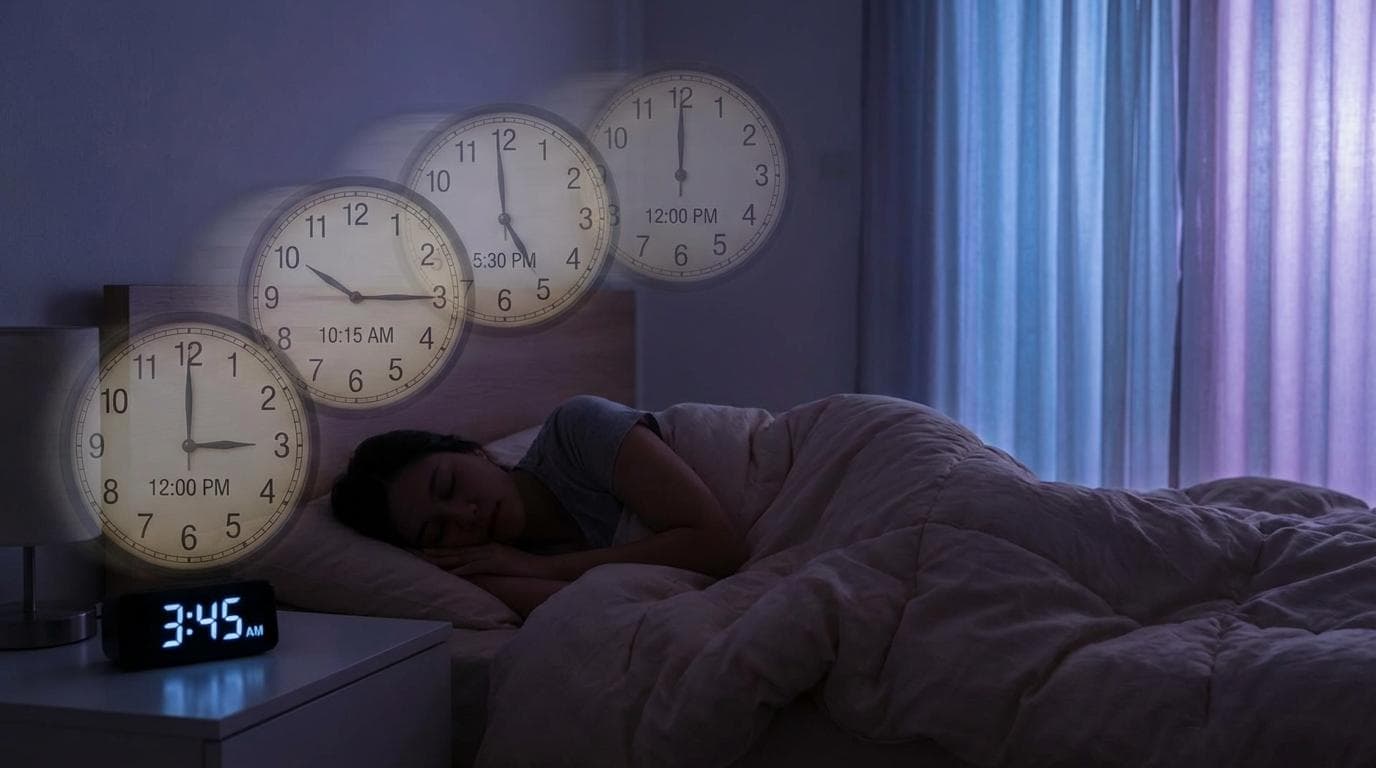
Sleep debt is one of the most searched — and most misunderstood — concepts in modern sleep science. The idea that you can simply sleep in on Saturday to erase a week of late nights is deeply appealing. But research in circadian biology and sleep physiology tells a more nuanced story. Whether you are a night owl struggling with early alarms or a shift worker battling irregular hours, understanding how sleep debt actually works is the first step toward reclaiming your energy and cognitive performance.
What Is Sleep Debt and Why It Matters
Sleep debt refers to the cumulative difference between the amount of sleep your body needs and the amount you actually get. Sleep researchers distinguish between two types: acute sleep debt and chronic sleep debt.
Acute sleep debt is what happens when you lose sleep over a short period — staying up late for a few nights during a busy week, for example. Studies published in the journal Sleep show that acute debt can often be partially recovered with one or two nights of extended sleep. Cognitive performance, reaction time, and mood tend to bounce back relatively quickly once adequate rest is restored.
Chronic sleep debt is a different animal entirely. When you consistently sleep less than your body requires over weeks, months, or years, the effects compound in ways that a single weekend of sleeping in cannot reverse. Research from the University of Pennsylvania found that subjects restricted to six hours of sleep per night for two weeks showed cognitive impairments equivalent to someone who had been totally sleep-deprived for 48 hours — yet most of these subjects reported feeling only slightly sleepy. This disconnect between perceived alertness and actual performance is one of the most dangerous aspects of chronic sleep debt.
The physiological consequences extend beyond feeling tired. Chronic sleep restriction has been linked to elevated cortisol levels, impaired glucose metabolism, increased inflammatory markers, and disrupted appetite-regulating hormones like ghrelin and leptin. Your body does not simply forget lost sleep; it accumulates damage at the cellular level.
Why Sleeping In on Weekends Backfires
The weekend recovery strategy is something most adults have tried at some point. You drag yourself through the work week on six hours a night, then sleep until noon on Saturday and Sunday, hoping to zero out the balance. Sleep scientists have a term for this pattern: social jetlag.
Social jetlag, a concept developed by chronobiologist Till Roenneberg, describes the misalignment between your biological clock and your social schedule. Every time you shift your sleep window by two or three hours on the weekend, you are essentially flying to a different time zone and back again — without ever leaving your bed.
A 2019 study published in Current Biology found that weekend recovery sleep did not prevent the metabolic dysfunction caused by sleep restriction during the week. Participants who were allowed to sleep in on weekends still showed decreased insulin sensitivity and increased caloric intake after dinner. Even more concerning, their circadian rhythms became more disrupted than those of participants who were simply sleep-restricted all week without weekend recovery.
The wolf chronotype is particularly vulnerable to social jetlag. Wolves naturally prefer later bedtimes and later wake times, which puts them in constant conflict with conventional work and school schedules. The result is a weekly cycle of sleep restriction followed by weekend oversleep that fragments their circadian rhythm rather than restoring it.
This does not mean weekend sleep is useless. An extra hour or two of sleep on a Saturday morning is certainly better than setting an early alarm you do not need. The problem arises when weekend oversleep becomes a substitute for consistent weeknight sleep, creating a pattern of constant circadian disruption.
How to Actually Recover from Sleep Debt
If sleeping in on weekends is not the answer, what is? The research points toward a gradual, consistent approach rather than dramatic weekend catch-up sessions.
- Add 15 to 30 minutes of sleep per night rather than several hours on weekends. This gentle extension allows your circadian system to adjust without the whiplash of dramatically shifted sleep times.
- Prioritize sleep consistency over sleep duration. Going to bed and waking up at roughly the same time every day — including weekends — helps stabilize your circadian rhythm and improves sleep quality even if total sleep hours stay the same.
- Use strategic napping carefully. A 20-minute nap taken before 2 PM can reduce acute sleep pressure without interfering with nighttime sleep. Longer naps or naps taken later in the day risk pushing your sleep window later and worsening social jetlag.
- Address the root cause. If you are consistently accumulating sleep debt, the solution is not better recovery strategies — it is restructuring your schedule to allow adequate sleep in the first place. For many people, this means examining screen habits, caffeine timing, and evening routines.
- Work with your chronotype, not against it. A wolf who forces a 6 AM alarm will always accumulate more sleep debt than a lion who wakes naturally at that hour. Understanding your biological sleep tendencies is essential to building a sustainable schedule. [Discover your chronotype](/quiz) to find out when your body is designed to sleep and wake.
Research from the Karolinska Institute suggests that it can take up to four days of adequate sleep to fully recover from one hour of lost sleep. For someone carrying weeks or months of accumulated debt, the recovery timeline extends accordingly. There are no shortcuts — only consistent, adequate sleep sustained over time.
The Long-Term Consequences of Ignoring Sleep Debt
The stakes of chronic sleep debt go beyond daytime fatigue. A landmark study tracking over 10,000 British civil servants found that those who reduced their sleep from seven hours to five hours or less per night nearly doubled their risk of cardiovascular death. Separate research has connected chronic sleep restriction to increased risk of type 2 diabetes, obesity, depression, and impaired immune function.
Perhaps most insidiously, chronic sleep debt erodes the very cognitive functions you would need to recognize the problem. Decision-making, emotional regulation, and self-awareness all decline with accumulated sleep loss. You become worse at judging how impaired you are, which makes you less likely to prioritize the sleep you need.
The good news is that the body is remarkably resilient. While chronic sleep debt cannot be erased with a single good night of sleep, sustained improvements in sleep habits produce measurable changes within weeks. Sleep architecture — the proportion of time spent in deep sleep and REM sleep — tends to normalize relatively quickly once consistent, adequate sleep is maintained.
If you suspect your energy levels, mood, or performance are being dragged down by accumulated sleep debt, the most important step is understanding your personal sleep needs. Not everyone requires eight hours, and your optimal schedule depends heavily on your chronotype. [Take the quiz](/quiz) to identify your sleep archetype and get personalized recommendations for building a sleep schedule that actually works with your biology — not against it.
Further Reading
Discover Your Sleep Chronotype
Take our free quiz to find your unique sleep chronotype and get a personalized 8-week program to optimize your sleep and energy.
Take the Free Quiz →More Articles
Social Jetlag: Why Your Weekend Sleep Habits Are Ruining Your Monday
Social jetlag disrupts your circadian rhythm every weekend. Learn how inconsistent sleep timing affects metabolism, mood, and long-term health by chronotype.
The Best Time to Nap Based on Your Chronotype
Discover the best time to nap based on your chronotype. Learn how Lions, Bears, Wolves, and Dolphins should time 20 vs 90-minute naps for maximum alertness.
How Much Sleep Do You Actually Need? (It Depends on Your Chronotype)
Discover how much sleep you actually need based on your chronotype. Bears, lions, wolves, and dolphins each have different optimal sleep durations.