Sleep hygiene is one of those terms that gets thrown around constantly — by doctors, wellness influencers, and mattress companies alike — but rarely gets explained with any precision. Most sleep hygiene advice falls into two categories: too vague to be useful ("establish a bedtime routine") or too rigid to be realistic ("no screens after 7 PM, ever").
The truth is that sleep hygiene is simply the set of behaviors and environmental conditions that either support or undermine your body's ability to fall asleep, stay asleep, and cycle through sleep stages effectively. Some of these factors have strong research backing. Others are widely repeated but less impactful than commonly believed.
This checklist separates the high-impact changes from the nice-to-haves, organized by when and where they matter.
Bedroom Environment
Your sleep environment accounts for a surprisingly large proportion of sleep quality — often more than your pre-bed routine.
Temperature: 65-68°F (18-20°C). This is the single most impactful environmental factor for most people. Your body needs to drop its core temperature by about 2-3°F to initiate sleep. A cool room facilitates this process. If you consistently wake up sweating or throwing off covers, your room is too warm. This factor alone resolves a significant percentage of sleep-onset difficulties.
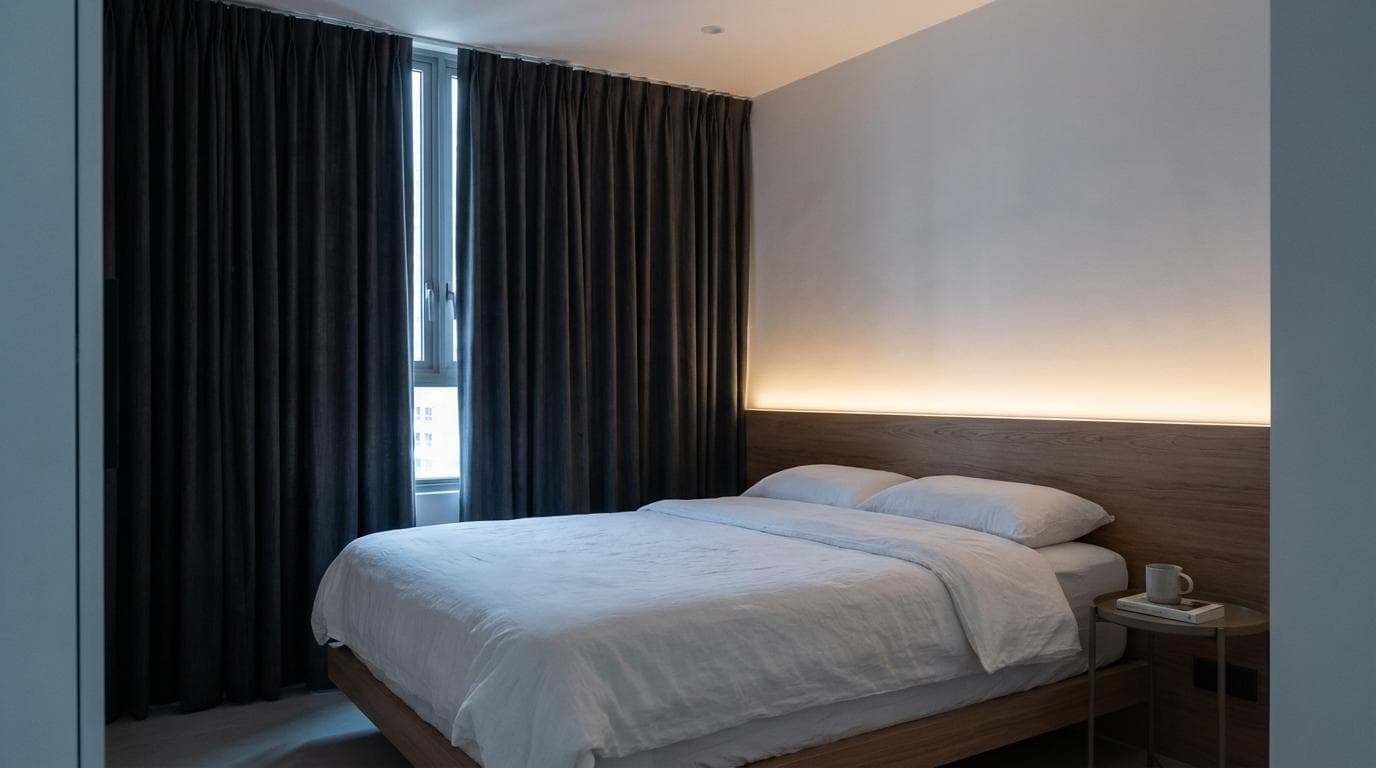
Darkness: as close to total as possible. Even small amounts of light — a charging indicator, a streetlight through curtains, a hallway light under the door — suppress melatonin production. Blackout curtains or a well-fitted sleep mask are among the highest-return sleep investments you can make.
Sound: consistent or absent. The problem with noise isn't volume per se — it's inconsistency. A steady hum (fan, white noise machine) at a moderate level is often better for sleep than absolute silence, because silence makes sudden sounds (a car door, a dog bark) more jarring and arousal-provoking. If you live in a noisy environment, a white noise machine is more effective than earplugs for most people.
Mattress and pillow quality. You don't need an expensive mattress, but you need one that's appropriate for your sleep position and body type. The mattress industry overcomplicates this: side sleepers generally need more give at the shoulders and hips; back sleepers need medium-firm support; stomach sleepers need firm to prevent spinal hyperextension. Replace pillows every 1-2 years — they lose support faster than mattresses.
Pre-Bed Routine (60-90 Minutes Before Sleep)
Consistent wind-down time. Your body doesn't have an on/off switch. The transition from wakefulness to sleep requires a gradual reduction in arousal — physiological, cognitive, and emotional. Starting your wind-down routine at approximately the same time each night reinforces the circadian signal that sleep is approaching.
Reduce light intensity. Dim overhead lights or switch to lamps. The color of light matters less than the intensity — though warm-toned light is somewhat better than cool-toned. The goal is to signal to your suprachiasmatic nucleus (your master clock) that dusk has arrived.
Screen management. The blue light argument is somewhat overstated — it's the mental stimulation, not just the wavelength, that keeps you awake. Scrolling social media or reading stressful news activates your sympathetic nervous system. If you use screens before bed, choose passive, low-engagement content at reduced brightness. Or better yet, switch to a book, podcast, or conversation.
Avoid heavy meals within 2-3 hours of bedtime. Large meals raise core body temperature (through thermogenesis) and activate digestion, both of which oppose the physiological conditions needed for sleep onset. A light snack is fine — some evidence suggests foods containing tryptophan (turkey, nuts, dairy) may mildly support sleep.
Warm bath or shower. This works through a counterintuitive mechanism: the warm water raises your skin temperature, which causes blood vessels to dilate. When you get out, your core body temperature drops rapidly — mimicking the natural temperature decline that precedes sleep. Timing: 60-90 minutes before bed for maximum effect.
Daytime Habits That Affect Sleep
Morning light exposure (first 30 minutes after waking). This is arguably the single most important sleep hygiene practice, and it happens in the morning, not at night. Bright light — ideally natural sunlight — in the first 30 minutes after waking anchors your circadian rhythm and ensures that melatonin release happens at the right time that evening. Step outside, even briefly. On overcast days, a 10,000 lux light therapy lamp for 20-30 minutes provides similar benefits.
Caffeine cutoff. Caffeine has a half-life of 5-6 hours, meaning half the caffeine from your 2 PM coffee is still circulating at 7-8 PM. For most people, a cutoff of early-to-mid afternoon is appropriate. For Dolphin chronotypes and others with sleep-onset difficulties, a noon cutoff may be necessary. Your chronotype influences your caffeine sensitivity — Wolves can generally tolerate later caffeine than Lions.
Regular exercise. Consistent physical activity improves sleep quality through multiple mechanisms: it increases adenosine buildup (sleep pressure), helps regulate body temperature, and reduces anxiety. Timing matters less than consistency — despite the old advice about avoiding evening exercise, research shows that moderate evening exercise doesn't impair sleep for most people. High-intensity exercise within 1-2 hours of bedtime is the exception.
Limit daytime naps. If you nap, keep it under 30 minutes and before 3 PM. Longer or later naps reduce sleep pressure (the homeostatic drive to sleep) and can make it harder to fall asleep at your target bedtime.
Common Sleep Hygiene Mistakes
Staying in bed when you can't sleep. If you've been lying awake for more than 20 minutes, get up and do something calm in low light until you feel sleepy again. Staying in bed while awake trains your brain to associate the bed with wakefulness — a process called conditioned arousal that can perpetuate insomnia.
Irregular sleep schedule. Varying your bedtime and wake time by more than 60 minutes day-to-day — including weekends — fragments your circadian rhythm. Consistency is more important than duration for most people. If you must choose between an extra hour of sleep and a consistent wake time, choose consistency.
Using alcohol as a sleep aid. Alcohol is a sedative, not a sleep aid. It accelerates sleep onset but fragments the second half of the night, suppresses REM sleep, and worsens sleep apnea. One drink in the evening is generally tolerable; two or more within 3 hours of bedtime measurably degrades sleep quality.
Over-optimizing. Some people become so anxious about following every sleep hygiene rule perfectly that the anxiety itself becomes the primary barrier to sleep. Sleep hygiene creates favorable conditions — it doesn't guarantee perfect sleep. If you're implementing most of these practices and still struggling, the issue may be underlying anxiety, a sleep disorder, or a chronotype mismatch with your schedule that requires deeper investigation.
Sleep Hygiene by Chronotype
Lions: Your biggest sleep hygiene risk is social pressure to stay up late. Protect your early bedtime ruthlessly. Morning light exposure comes naturally — focus on your evening wind-down.
Bears: The standard sleep hygiene advice works best for you because it was essentially designed for the majority chronotype. Focus on consistency and managing the afternoon energy dip without excessive caffeine.
Wolves: Conventional sleep hygiene advice often backfires for Wolves because it assumes an early-to-bed preference. Adjust the timing: your wind-down might start at 11 PM, your caffeine cutoff might be 4 PM rather than noon. The principles apply — the clock positions shift.
Dolphins: Sleep hygiene is especially critical for you because your sleep is more fragile. Prioritize bedroom environment (temperature, darkness, sound) above all else, and be strict about the 20-minute rule — don't lie in bed awake.
Not sure which chronotype you are? Take the free chronotype quiz and get a personalized sleep optimization plan tailored to your biology.
Further Reading
Discover Your Sleep Chronotype
Take our free quiz to find your unique sleep chronotype and get a personalized 8-week program to optimize your sleep and energy.
Take the Free Quiz →More Articles
Social Jetlag: Why Your Weekend Sleep Habits Are Ruining Your Monday
Social jetlag disrupts your circadian rhythm every weekend. Learn how inconsistent sleep timing affects metabolism, mood, and long-term health by chronotype.
The Best Time to Nap Based on Your Chronotype
Discover the best time to nap based on your chronotype. Learn how Lions, Bears, Wolves, and Dolphins should time 20 vs 90-minute naps for maximum alertness.
How Much Sleep Do You Actually Need? (It Depends on Your Chronotype)
Discover how much sleep you actually need based on your chronotype. Bears, lions, wolves, and dolphins each have different optimal sleep durations.