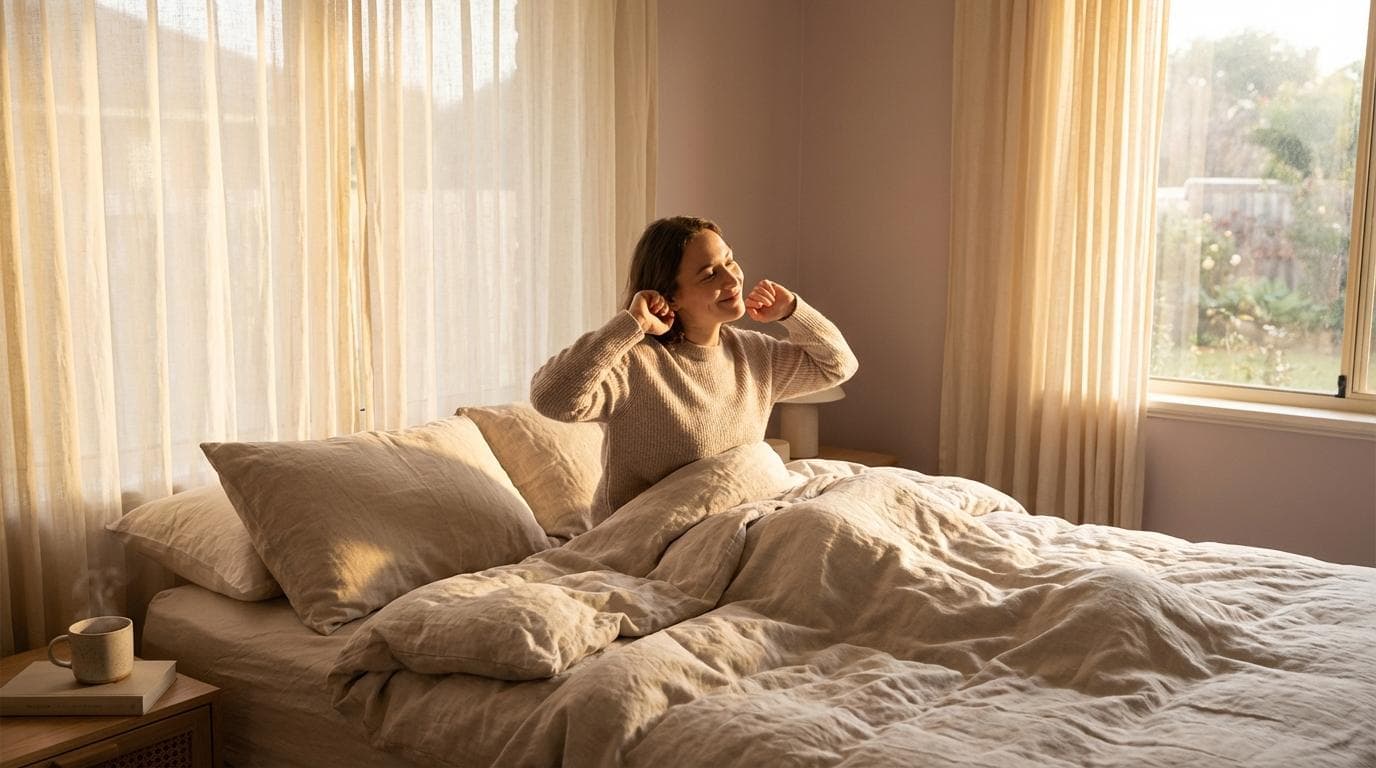
A disrupted sleep schedule is one of the most common sources of daytime fatigue, poor mood, and reduced cognitive performance -- and it is also one of the most fixable. Whether you have been staying up too late, sleeping at irregular times, or recovering from travel disruption, circadian science gives us a clear picture of how to realign your body clock in about a week.
The catch is that the reset has to work with your chronotype, not against it. A bear trying to shift using a lion's protocol will struggle. The mechanics are universal, but the timing is different for each chronotype.
How Your Body Clock Actually Works
Your circadian rhythm is controlled by a master clock in the brain called the suprachiasmatic nucleus, located in the hypothalamus. It runs on an approximately 24-hour cycle -- but "approximately" is the important word. Left to its own devices in the absence of external cues, most people's internal clocks run slightly longer than 24 hours. Without daily recalibration, sleep timing would drift later over time.
The cues that reset your clock every day are called zeitgebers -- German for "time-givers." They include:
- Light (the most powerful of all zeitgebers)
- Food timing and the timing of the first meal
- Exercise and the time of day it occurs
- Social contact and external obligations
- Core body temperature fluctuations
Disrupted sleep schedules are almost always the result of irregular or inconsistent zeitgeber patterns. Fixing your sleep schedule means using these signals deliberately and consistently.
Days 1 to 3: Light Is Your Most Powerful Tool
Morning light exposure is the single most effective lever for shifting your sleep schedule. Light hitting the retina in the first hour after waking sends a direct signal to the suprachiasmatic nucleus that it is time to be alert -- and sets a timer for when melatonin will be released that evening, typically 14 to 16 hours later.
For bear chronotypes, morning light between 7 and 8am is the target window. Even on overcast days, outdoor light is dramatically more effective than indoor lighting. Outdoor conditions can range from 1,000 to 10,000 lux depending on weather. Indoor lighting rarely exceeds 200 to 500 lux.
Practical protocol for days 1 to 3:
- Set a consistent wake time and hold it, including on weekends -- this single commitment is the foundation everything else builds on
- Get outside within 30 minutes of waking for at least 10 minutes, without sunglasses if light conditions allow
- In the evening, dim household lights by 8pm and reduce screen brightness significantly -- dimming matters more than spectrum
The bear chronotype adapts well to this protocol because their natural sleep timing is already reasonably close to socially conventional hours. The biggest challenge for bears is usually weekend drift -- staying up later Friday and Saturday and then finding it impossible to sleep Sunday night.
Days 3 to 5: Meal Timing as a Secondary Clock
There is growing evidence that when you eat has circadian effects independent of light. Eating meals at consistent times -- particularly the first meal of the day -- reinforces your light-based schedule and reduces the desynchrony between your master clock and peripheral clocks in your digestive organs.
During a sleep schedule reset:
- Eat your first meal within one hour of waking at your target wake time
- Avoid large meals within two hours of your target bedtime -- digestion generates internal heat that interferes with the temperature drop your body needs to initiate and maintain sleep
- Caffeine has a half-life of five to seven hours in most people. If your target sleep time is 10:30pm, your last coffee should be by early afternoon
Fasting during the scheduled night period and eating during the scheduled day period is one of the more effective tools for rapid schedule adjustment during jet lag recovery. Applied gently, the same principle supports domestic schedule repair.
Days 5 to 7: Social Zeitgebers and Exercise Timing
Social interactions -- meetings, calls, commitments that require you to be awake at specific times -- are underrated as circadian anchors. The reason travel to a new time zone eventually resolves itself is partly that social obligations force you onto the local schedule. Building external structure reinforces your internal one.
Anchoring commitments that help fix your schedule:
- A morning obligation (a call, a class, a walk with a friend) at a consistent time creates external pressure that supports your target wake time better than willpower alone
- Morning or early afternoon exercise reinforces earlier chronotypes. Late evening exercise after 7 or 8pm can delay sleep timing by raising core temperature and cortisol at the wrong point in the cycle
For bears, who naturally align reasonably well with conventional schedules, the biggest gains in sleep schedule repair usually come from eliminating two main disruptors: weekend schedule drift and inconsistent morning light exposure.
What to Do When You Cannot Fall Asleep at Your Target Time
This is where most people get stuck. You set a target bedtime of 10:30pm, but your body clock is calibrated for 1am. You lie in bed for two hours.
A sustainable approach for moving bedtime earlier:
- Shift your bedtime 15 minutes earlier every two to three days rather than jumping to your target immediately -- gradual shifts are less disruptive and easier to maintain
- Do not lie in bed awake for more than 20 minutes. Get up, move to dim light, do something calm, and return when you feel genuinely sleepy. This preserves the association between your bed and sleep rather than reinforcing bed as a place of anxious wakefulness
- Use your bed only for sleep -- not for reading, scrolling, or watching video -- so your nervous system learns to associate that environment with sleep onset
The temperature-based sleep trigger is underused and highly effective: a warm bath or shower 90 minutes before target bedtime causes a rapid drop in core temperature when you get out, mimicking the cooling signal that initiates sleep onset.
A Note on Chronotype Differences
A wolf (late chronotype) using the same protocol as a bear will encounter significantly more resistance. Their melatonin rises later, their cortisol peaks later, and their subjective alertness window is shifted by two to four hours compared to a bear. A wolf forcing a 6am wake time without adjusting for their circadian biology is fighting genuine physiology, not simply a bad habit.
Understanding your chronotype via the [quiz](/quiz) helps you set realistic, sustainable targets. A wolf who cannot maintain a 6am schedule long-term is not failing -- they are fighting a genetic predisposition, and the solution involves finding a schedule that is compatible with their biology rather than socially imposed.
The Seven-Day Reality
Seven days is enough to meaningfully shift a disrupted schedule if the core principles are applied consistently -- especially wake time consistency and morning light exposure. Full stabilization and consolidation takes two to three weeks of maintained behavior.
The essentials:
- One consistent wake time with no exceptions, including weekends
- Morning outdoor light within 30 minutes of waking
- Consistent meal timing that anchors your body's peripheral clocks
- Evening light reduction beginning around 8pm
- Gradual bedtime shifting if your target is a large jump from your current timing
Your body clock wants to be synchronized. Give it consistent signals and it will meet you there.
Discover Your Sleep Chronotype
Take our free quiz to find your unique sleep chronotype and get a personalized 8-week program to optimize your sleep and energy.
Take the Free Quiz →More Articles
Social Jetlag: Why Your Weekend Sleep Habits Are Ruining Your Monday
Social jetlag disrupts your circadian rhythm every weekend. Learn how inconsistent sleep timing affects metabolism, mood, and long-term health by chronotype.
The Best Time to Nap Based on Your Chronotype
Discover the best time to nap based on your chronotype. Learn how Lions, Bears, Wolves, and Dolphins should time 20 vs 90-minute naps for maximum alertness.
How Much Sleep Do You Actually Need? (It Depends on Your Chronotype)
Discover how much sleep you actually need based on your chronotype. Bears, lions, wolves, and dolphins each have different optimal sleep durations.